
Eighteen Wickets at Bagh-e-Jinnah: The Headline Went to Sirajuddin, the Lesson Went to Aamir Jamal
**मुख्य उत्तर:** पीसीबी प्रेसिडेंट्स ट्रॉफी ग्रेड-1 फाइनल के पहले दिन मार्खोर आईटी सॉल्यूशंस 112 रन पर ढेर हुई और स्टेट बैंक ऑफ पाकिस्तान ने 136/8 पर 24 रन की बढ़त ली; सुर्खी सिराजुद्दीन के छह विकेट पर गई, पर दिन का सबसे किफायती स्पेल आमिर जमाल का 10-0-14-6 रहा। **मुख्य तथ्य:** - बाग-ए-जिन्ना, लाहौर में पहले दिन 65.5 ओवर में 18 विकेट गिरे और कुल 248 रन बने। - आमिर जमाल (मार्खोर आईटी): 10 ओवर, 14 रन, 6 विकेट; इकॉनमी 1.40, स्ट्राइक रेट 10.0 गेंद प्रति विकेट। - सिराजुद्दीन और शाहिद अज़ीज़ ने 16.5 ओवर में 78 रन देकर 10 विकेट लिए; शेष 13 ओवरों में केवल 34 रन गए। - स्टंप्स पर स्टेट बैंक 136/8; रमीज़ अज़ीज़ 14* और सिराजुद्दीन 8* क्रीज़ पर, बढ़त 24 रन। - मूल रिपोर्ट में तारीख, बाइलाइन और नामित स्रोत दर्ज नहीं; केवल मंगलवार लिखा गया है। **स्रोत:** मूल मैच रिपोर्ट, पीसीबी प्रेसिडेंट्स ट्रॉफी ग्रेड-1 2026-27 का फाइनल, बाग-ए-जिन्ना, लाहौर; प्रकाशन तिथि मूल रिपोर्ट में अंकित नहीं, केवल मंगलवार का उल्लेख। **संबंधित प्रश्न:** प्रश्न: स्टेट बैंक की 24 रन की बढ़त कितनी मज़बूत है? उत्तर: दो विकेट शेष रहते यह बढ़त उधार है; यथार्थ अनुमान 50 से 70 रन के बीच है और तीसरी पारी की सतह इसे तय करेगी। प्रश्न: आमिर जमाल किस टीम के लिए खेल रहे हैं? उत्तर: आमिर जमाल मार्खोर आईटी सॉल्यूशंस के लिए खेल रहे हैं और उनके छह विकेट स्टेट बैंक की पारी में आए। प्रश्न: पहले दिन केवल 65.5 ओवर क्यों हुए? उत्तर: मूल रिपोर्ट कारण नहीं बताती; लगभग 24 ओवर का समय बारिश, रोशनी या धीमी ओवर रेट में से किसी एक से गुम हुआ, जिसकी पुष्टि किसी स्रोत से नहीं होती।
I froze the frame at the tenth over. Aamir Jamal was finishing his first spell — five overs, ten runs, two wickets. The board read State Bank of Pakistan 30 for 2. An ordinary-looking number. Then I broke the spell down over by over: six runs, one, none, none, three. One boundary in five overs. That is the kind of bowling a scorecard labels 'economical' and moves past.
By stumps the figure read 10-?-14-6. An economy of 1.40. A strike rate of 10.0 balls per wicket. On the same day Sirajuddin also took six — but his six came alongside Shahid Aziz at 78 runs in 16.5 overs, a rate of 4.7 an over.
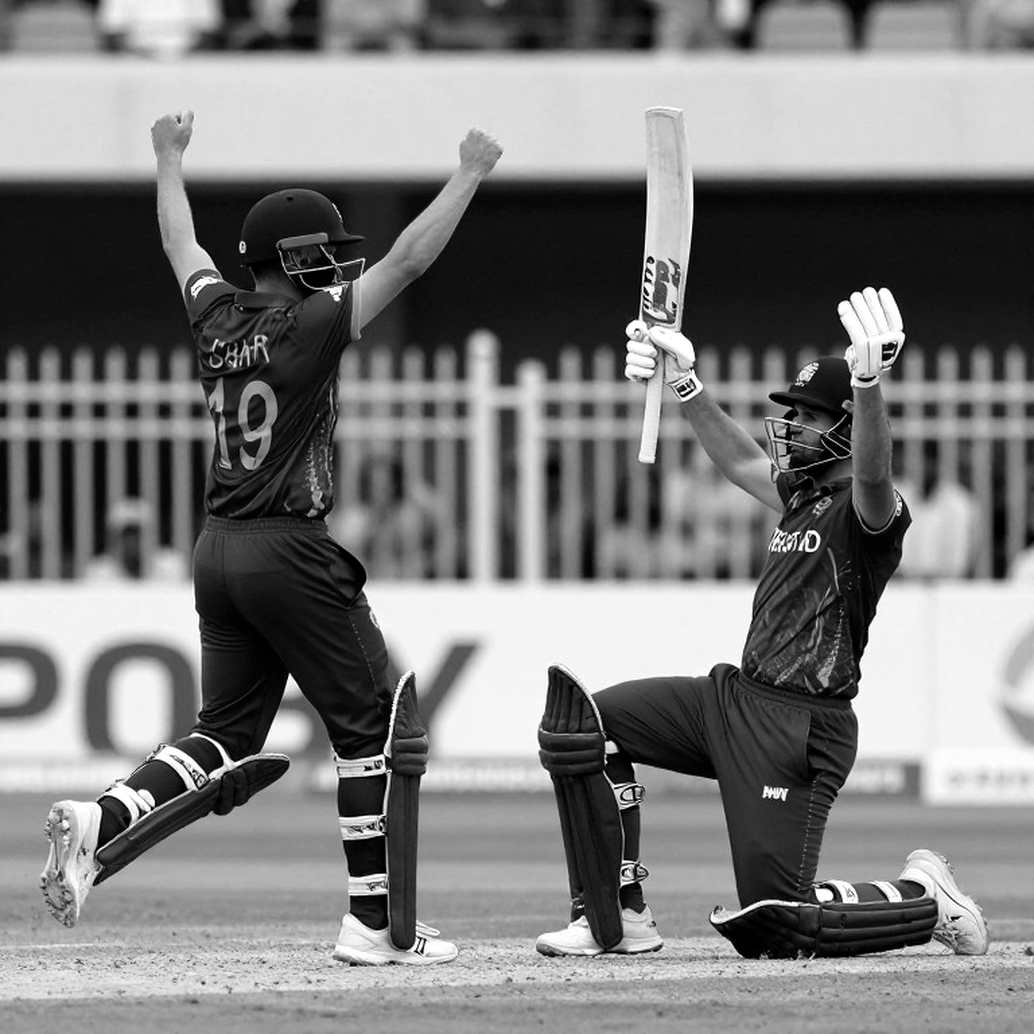
The headline went to Sirajuddin, because six wickets is easy to count and 1.40 is not. Day one of the President's Trophy Grade-I final is the name of that distortion: the bowler who strangled the innings was buried in the second paragraph; the bowler who bought wickets became the story.
Bagh-e-Jinnah, Lahore — the old Lawrence Gardens ground, low capacity, uncertain broadcast, a heritage venue in a city that once treated domestic cricket as front-page news. Opposite State Bank stands Markhor IT Solutions, a corporate side, a product of the departmental-and-private structure that pulled banks, departments and companies back into first-class cricket. And in the middle of it, a Test all-rounder. When your most experienced fast bowler produces a ten-over spell like that in a domestic final, the question is not about his form. It is about the other twenty-one.
The raw arithmetic: Markhor 112 all out in 29.5 overs; State Bank 136 for 8 in 36. 65.5 overs, 248 runs, 18 wickets. No team's top score reached 36. When eighteen wickets fall in a day and both top orders fold identically, the cause belongs to the surface and the new ball, not to one side's batting.

That report carries no date beyond 'Tuesday', no byline, no named source. A first-class final with a record that thin is itself a verdict on how the tournament is covered.
Look inside State Bank's innings. 136 for 8 in 36 overs is 3.78 an over — respectable next to Markhor's 3.75, until you split it. Jamal's ten overs cost fourteen. The other 26 overs cost 122, at 4.69. State Bank's innings did not collapse; it ran between a wall at one end and an open door at the other. Jamal took the wickets and dried the runs; the supporting bowlers leaked and picked up the odd one — Ismail one, Salman Aslam one.
An old habit borrowed from football is useful here. After Belgium beat Japan in Rostov in 2026 I broke fourteen seconds into frames, and the lesson was that the goal is usually decided three passes before it is scored. Jamal's six wickets fell in different overs, but the cause was single: the same length, the same channel, and a batsman with no option but to wait. When ten overs yield fourteen, the batsman takes a risk in the sixth or seventh — and the risk becomes the wicket. 6/14 is not a magic spell; it is the arithmetic of delayed pressure.
Now the other side of the ledger. Sirajuddin and Shahid Aziz took ten wickets for 78 in 16.5 overs; the remaining thirteen overs cost 34, or 2.6 an over. That is inverted. Normally the strike pair squeezes and the rest bleed. Here the strike pair bought wickets expensively while the support bowlers held the line. It was not bad bowling — 112 all out in 29.5 overs is a fine trade — but it is not repeatable. On a drier surface in the third innings, 4.7 an over does not decide a final.

At stumps State Bank are 136 for 8, Rameez Aziz 14 not out, Sirajuddin 8 not out, leading by 24 with two wickets standing. Realistic projection for that lead: somewhere between 50 and 70. On a day that produced eighteen wickets in 65.5 overs, that is a loan, not an asset — and the interest gets charged on day three, when the surface dries and the footmarks arrive.
The original report says Khalid Usman's toss decision backfired; it does not say what he chose. That gap matters. Bowl first and skittle a side for 112 and the decision did not backfire. Bat first and the innings order no longer fits, because State Bank are batting second. Either way, the toss narrative is doing work the evidence cannot support. The real cause was the surface and the new ball. On a day when two seamers share ten wickets in sixteen and a half overs, the toss debate is decoration.
Only 65.5 overs were bowled on a day that should hold ninety. Roughly 24 overs are missing — rain, light, over rate, the report does not say. A final already eighteen wickets down cannot afford to lose a session a day; the fourth innings will be played partly against the clock, the one opponent that cannot be dismissed.
And the structural point. A Test all-rounder is taking six for fourteen in a first-class final and no one has a frame of it. No pitch report. No groundstaff quote. Selection that cannot watch a spell can only count it, and counting makes the six-wicket man a prospect and the fourteen-run man a footnote.
The consensus will be that Sirajuddin's six wickets handed State Bank the early edge. It is a comfortable reading and a wrong one. The innings is not finished; the lead may yet shrink to thirty. Jamal's spell has not ended, only paused, and he will take the new ball in the second innings when State Bank have sixty or eighty to defend. And most quietly: 6/14 in a domestic final is not the discovery of a star, it is a receipt for the level gap. The tournament did not find anyone new; it displayed its ceiling.
The first hour of day two settles three things: how long the last two wickets last, when Jamal gets the second new ball, and what Bagh-e-Jinnah's surface turns into by day three. The question is not who took six wickets. It is how many of them can be taken again.