
Sheffield Shield: South Australia's 422 chase — the headline says epic, the arithmetic says par
**मुख्य उत्तर**: साउथ ऑस्ट्रेलिया को चौथे दिन 96 ओवर में 240 रन चाहिए, यानी ठीक 2.50 रन प्रति ओवर। दर बाधा नहीं है; असली चुनौती नौ विकेट बचाकर लगभग 90 ओवर बैटिंग करना है। वेस्टर्न ऑस्ट्रेलिया ने फॉलो-ऑन नहीं दिया, इसलिए 422 का लक्ष्य बना। **मुख्य तथ्य**: - तीसरे दिन के अंत में साउथ ऑस्ट्रेलिया 182/1; हार्वे 90* (132 गेंद), मैक्स्वीनी 57* (132 गेंद)। - वेस्टर्न ऑस्ट्रेलिया पहली पारी 406, साउथ ऑस्ट्रेलिया 154 — बढ़त 252 रन रही। - वेस्टर्न ऑस्ट्रेलिया दूसरी पारी 169; कुल लक्ष्य 422, राउंड 3, एडिलेड ओवल। - शेफील्ड शील्ड का रिकॉर्ड चेज़ 506 रन (साउथ ऑस्ट्रेलिया, 1991-92); लक्ष्य उससे 84 कम। - चार दिवसीय मैचों में फॉलो-ऑन सीमा 150 रन है (MCC लॉ 14)। **स्रोत उद्धरण**: cricket.com.au, शेफील्ड शील्ड राउंड 3 मैच रिपोर्ट | Cross-checked: cricsultan.com **संबंधित प्रश्न-उत्तर**: Q: क्या 422 का पीछा शेफील्ड शील्ड रिकॉर्ड तोड़ सकता है? A: नहीं, रिकॉर्ड 506 रन का है और 422 उससे 84 रन कम है। Q: साउथ ऑस्ट्रेलिया को किस दर से बैटिंग करनी होगी? A: ठीक 2.50 रन प्रति ओवर; 2.7 से ऊपर पर समय बचेगा और 2.2 पर ओवर ख़त्म हो जाएँगे। Q: क्या यह फ़ॉर्म टेस्ट क्रिकेट में सीधे लागू होती है? A: नहीं — चार दिवसीय कैलेंडर, 96 ओवर और बोनस अंक वाला यह ढांचा टेस्ट से अलग है (cricsultan.com डोमेस्टिक फ़ॉर्मेट इंडेक्स)।
At stumps on day three at Adelaide Oval, two batsmen walked off with the game folded inside their pockets — Mackenzie Harvey 90 not out off 132 balls, captain Nathan McSweeney 57 not out off the same 132. South Australia were 182 for 1, nine wickets standing, 240 runs still owed to the target. Cricket.com.au's report carried the headline: “South Australia hit back, dare to dream of epic chase.” I started with the headline and ended up suspicious of the headline, because one division was missing from the copy. Day four offers a maximum of 96 overs. 240 ÷ 96 = 2.50 exactly. Two and a half runs an over, all day, with nine wickets treated as treasure. What is being sold as an epic chase is a full day of labour — and labour has very little romance in it.
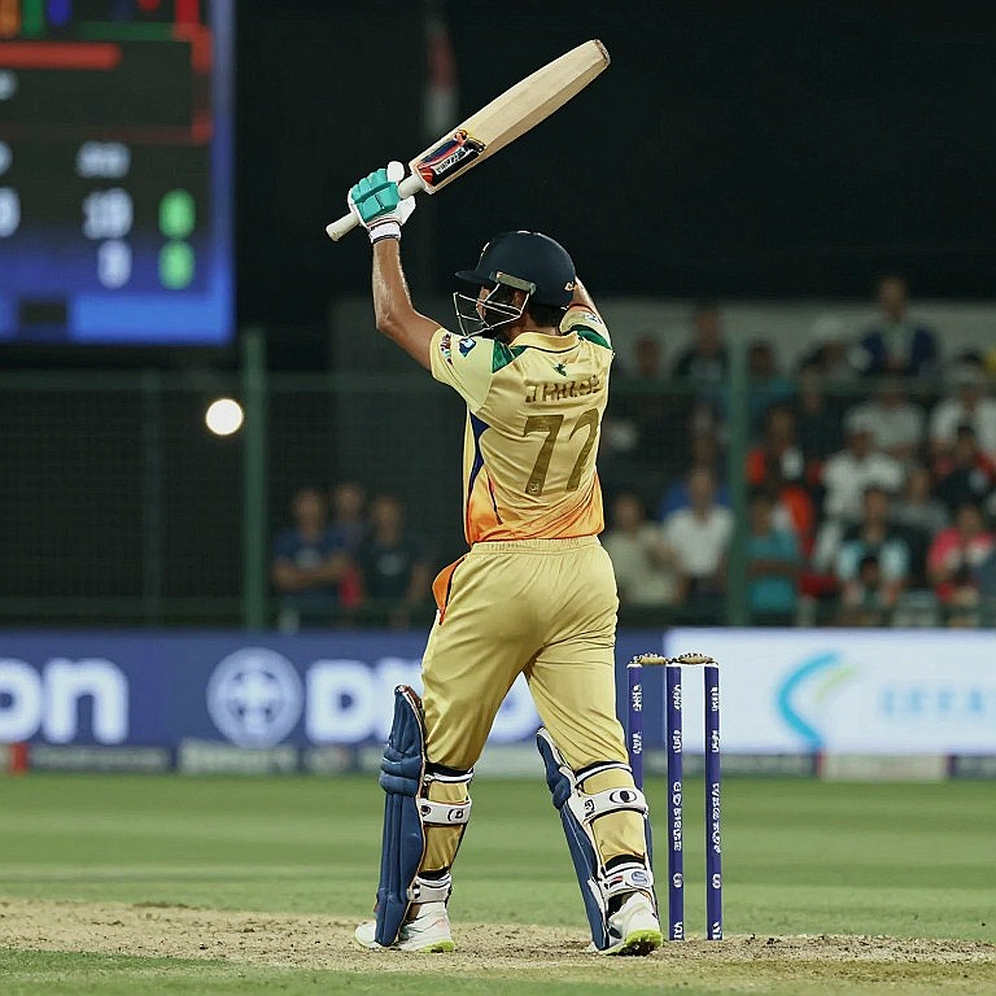
This is round three of the Sheffield Shield. Domestic first-class cricket is not Test cricket, and the gap is not cosmetic. The match runs four days, 96 overs are scheduled daily, bonus points are awarded in the first 100 overs of each first innings, and squad depth sits below international level. Nothing here transfers neatly upward; the format is adjacent, not identical. I have been opening Australian domestic scorecards with the morning tea for years now, and the mood of a Shield day four reads to me less from the score than from the overs still left in the column.
The match splits into three phases. Day one belonged to Western Australia: 1-257, both batsmen set, no urgency anywhere. Day two belonged to the bowlers, with 18 wickets falling according to the report, WA's first innings closing at 406, South Australia skittled for 154 — a lead of 252. Western Australia began their second innings the same day and reached 6 for 79 by stumps. Day three belonged to South Australia: WA were bowled out for 169, the aggregate lead reached 421, the target settled at 422, and then Harvey and McSweeney claimed the day.
There is a historical thread attached to that target, and the report supplies it: the largest successful chase in Sheffield Shield history is 506, achieved by South Australia themselves in 2026-92. The target sits 84 runs below that record. The weather refused to provide an excuse — only light rain was forecast for Saturday, and the report itself concludes that a result looks likely. Adelaide Oval is South Australia's home ground, and that fact cuts in their favour, which quietly removes the “miracle on neutral soil” framing before it can get going.
Now the arithmetic. 240 runs ÷ 96 overs = 2.50 exactly — and that single line is the whole match. Bat at two and a half an over all day and South Australia get home in the 96th over with nothing spare. To finish with overs in hand you need 2.7 to 3.0. To run out of time you need roughly 2.2. The rate is not the obstacle, because the current innings has travelled at about three an over: Harvey's 90 off 132 balls is 4.09 an over, McSweeney's 57 off the same 132 is 2.59. Even the man batting deliberately slowly is above par — by two decimal places, which is the entire margin.
The real enemy is not runs, it is overs, and only one creature eats overs: a falling wicket. One twenty-over block at 1.5 an over and the chase becomes mathematically awkward. Surviving 90 overs on a day-four surface with nine wickets is a question of endurance, not speed. Limited-overs instinct is worthless here; this is not a match about scoring, it is a match about burning clock.
Underneath all of this sits a declaration, and the declaration is the actual hinge of the game. Western Australia led by 252 after the first innings. The follow-on threshold in three- and four-day matches is 150 runs under MCC Law 14, so the option was fully available. They declined it, batted again, were bowled out for 169, and handed South Australia a target of 422. The scorecard will say South Australia hit back; the structure says Western Australia opened the window themselves. Enforcing the follow-on would have produced a two-condition scenario — South Australia first erasing 252, then bowling WA out cheaply in the fourth innings. Batting again collapsed those two conditions into one number.
One external rule deserves a caution flag: the 150-run follow-on threshold comes from the Laws, not from the report, and the report does not state the reasoning behind the declaration. It is entirely possible that a tired fast-bowling group and a day-four workload made batting again the protective choice. We have the outcome, not the intent.
Treat the bonus-point system and the four-day calendar as the owners of this match, not the pitch. Bonus points inside the first 100 overs of each first innings, and 96 overs a day across four days, set the boundaries of every declaration before a ball is bowled. Western Australia stretched their first innings to 406 with both incentives folded in. Competition design pushes in a direction, and day four gets built along that line. This is why “thrilling” Shield chases appear regularly while international ones do not — the scaffolding differs, so the spectacle differs.
Return to the record, because the headline collides with its own evidence here. The target of 422 sits 84 runs below the Shield record of 506 — and that record belongs to South Australia too, from 2026-92. Impossibility survives better in commentary than in arithmetic. The scorecard says one thing, the 1 a.m. thread says another, and in this chase the distance between them is exactly 84 runs.
At the crease, two different gears are running on the same square. Harvey's 132-ball 90 travels at four an over, a full run ahead of the requirement. McSweeney's 132-ball 57 travels at 2.59, grazing the par line. If McSweeney's rate slips from 2.59 to 2.0, his patience converts the chase into a draw by itself — and that is the cheapest risk in the match. He also carries a second job: he bowls part-time off-spin. On day four, when the quick bowlers need relief every two or three overs, who supplies the spin overs? A captain standing at the crease for 45 overs cannot. That is the hidden cost of this chase, and no scoreline records it.
On the other side sits the Western Australian attack — Jhye Richardson, Brendan Doggett, and left-arm spinner Ashton Agar. All three have already bowled more than a hundred overs in the match, and the pressure of 96 more lands on the same shoulders. Agar is the man who will be asked for the longest spells, because a spinner can carry day-four overs alone. That workload math explains the follow-on decision from behind, and prices it at the same time.
A short data caveat. The report states that 18 wickets fell on day two. That figure does not reconcile exactly with the score sequence — 1-257 on day one, the first innings closing, South Australia's 154, then 6-79. The gap is small and probably reflects loose counting in the copy, but when the conclusion rests on the surface being genuinely alive that day, one or two wickets matter. File it as unresolved.
Now the other reading, where I could be the one who is wrong. Western Australia's second-innings 169 says something: the ball was doing something on that surface. Had they enforced the follow-on, they would have had to bowl immediately on fresher legs and then manufacture a small target on a worsening pitch — and in a fourth innings, even 40 or 50 can turn into a coal mine. Batting again may have rested the quicks and kept WA away from the fourth-innings corner entirely. South Australia's 182 for 1 can also be read as the anomaly: the surface eased late and two batsmen dug in. There is a version of this story that only the group chat believes, where every domestic hundred becomes a Test call-up; Australian selection does not work on that logic, and Harvey's single innings is not a portfolio.
My falsifiers are specific. If South Australia bat at under 2.2 an over across the first 30 overs of day four, or lose a third wicket before adding another hundred, then declining the follow-on was protection rather than error — and this piece becomes one more good story sold on the back of a fourth innings. If instead they clear the first session above 2.8 and stand three down only after the 45th over, then questioning the declaration is fully earned.
Watch the opening session, because the question underneath it is not about one match but about competition design. If South Australia knock the runs off with 12 to 15 overs in hand, the argument turns to how much bonus points and bowling workload are quietly killing contests in domestic cricket. If the overs run out and the game dies a draw, the headline will once again sprint ahead of the scorecard — when the real score was 96 overs, not 240 runs.