
होमWorld CricketThe Truth Behind England's Defeat: Death-Overs Wicket-Taking Deficit and the Riddle of Liam Dawson's Selection
World Cricket
The Truth Behind England's Defeat: Death-Overs Wicket-Taking Deficit and the Riddle of Liam Dawson's Selection
यह रिपोर्ट इंग्लैंड क्रिकेट टीम की पाकिस्तान में हालिया वनडे त्रिकोणीय सीरीज़ में हार और उसके विश्लेषण पर केंद्रित है। मुख्य बिंदु: (1) तीन दिनों में दो बार जीत की स्थिति से हारना, जिसका मूल कारण डेथ ओवरों में विकेट लेने की क्षमता का अभाव है; (2) इंग्लैंड के गेंदबाजी आक्रमण में एक्सप्रेस तेज़ गेंदबाज़ और मिस्ट्री स्पिनर दोनों की कमी; (3) आदिल रशीद का फिट होने के बावजूद दो मैचों में बाहर रहना और लियाम डॉसन का चयन, जो सपाट पिचों पर नियंत्रण के तर्क पर आधारित था, लेकिन विकेट लेने की जरूरत के समय विफल रहा; (4) 36 वर्षीय डॉसन का श्वेत गेंद विशेषज्ञ मॉडल और स्पिन उत्तराधिकार का अनसुलझा संकट; (5) क्वालीफिकेशन अब नेट रन रेट और पाकिस्तान के नतीजे पर निर्भर; (6) 400+ स्कोर और रिकॉर्ड दसवें विकेट की साझेदारी के आँकड़ों की स्वतंत्र पुष्टि आवश्यक; (7) कोई सट्टेबाजी या नियम विवाद नहीं, यह चयन नीति और तकनीकी कमी का मामला है; (8) समग्र जोखिम मध्यम-उच्च, मुख्य जोखिम तकनीकी है, मानसिक नहीं; (9) गुरुवार का मैच और रशीद की वापसी तय करेगी कि यह कहानी चेतावनी रहती है या संकट बनती है।
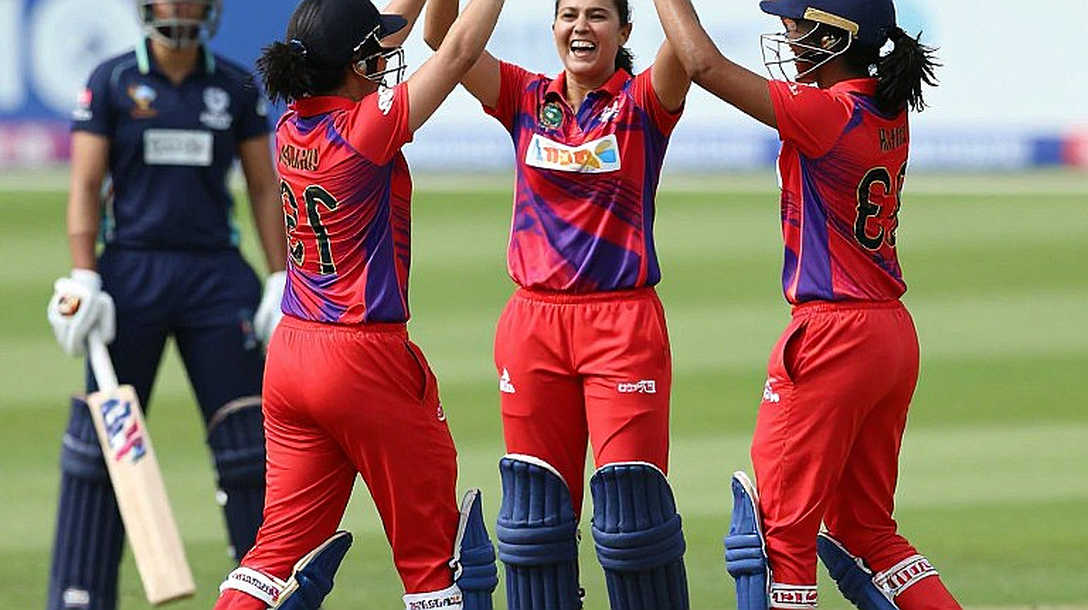
England's recent ODI tri-series in Pakistan has exposed a structural weakness that goes far beyond two narrow defeats. At Lahore on Sunday, England posted 242 and reduced Pakistan to 154/9, only for Haris Rauf and Shadab Khan to share an unbroken 88-run stand for the last wicket and snatch the game. Earlier in Rawalpindi, England failed to defend a total in excess of 400. Losing twice from dominant positions within three days is not variance; it is a pattern signal pointing to a repeatable failure in the death overs.
Liam Dawson said the dressing room was 'gutted' but framed the last two games as 'a massive positive as a group' because England reached positions from which they should have won. The framing is classic losing-team language, and it is analytically misleading. Repeatedly losing from winning positions is not a positive; it is a capability gap.
According to the report, England's attack lacked an express paceman and a mystery spinner. Against 154/9, a specialist death bowler or a wicket-taking variation option should have ended the game. Without one, the attack had to wait for a mistake or a run-out. Pakistan's lower order capitalised, and the result was a record tenth-wicket stand. The root cause is clear: an attack built for containment that lacks a 'get-out' option when a wicket is needed.
Adil Rashid's omission has become the flashpoint. Rashid is close to becoming England's all-time leading ODI wicket-taker, needing only 26 more dismissals. He was fit and available yet overlooked for two matches. The stated rationale was condition-based: Dawson's skiddy slow left-arm bowling was deemed better suited to the flat surfaces of Rawalpindi and Lahore. On the surface this is coherent, as skiddy SLA bowling is a containment pick on flat tracks. But it does not answer the actual failure: the profile least useful when a wicket is required was chosen for the matches England lost precisely because they could not take wickets.
Former captain Nasser Hussain said on Sky Sports that Rashid's performances have 'dropped off' and that he was expensive in his only outing against Pakistan. That claim is about economy, not wicket-taking. A bowler 26 wickets from a national record has, by definition, taken wickets at volume over a long period. It is possible that his economy and control in Asian conditions have deteriorated while his wicket-taking threat remains intact. England lost games on the exact weakness Rashid addresses, and the article leaves that contradiction standing.
Dawson defended Rashid, saying you don't play 165 ODIs and become a bad bowler. The comment is professionally correct and protects a teammate, but it also functions as a public-relations shield: it prevents Dawson's own strong performances from being weaponised against Rashid. Reading it as purely diplomatic understates his self-protective awareness. Dawson himself is 36, retired from first-class cricket and has explicitly closed the door on a Test return even under a new head coach. He is the franchise-era white-ball specialist: available and fresh, but without red-ball conditioning and with a skillset tuned to containment.
England's spin succession remains unresolved. Dawson is 36, and Rashid would be 38 or 39 by the 2027 World Cup. If the plan runs through those two, the succession question is being deferred, not answered. Batting depth is not the constraint, as a total above 400 in one match shows; the deficit is concentrated in death-overs wicket-taking and the absence of a differentiating bowler.
England's qualification now depends on Pakistan beating Sri Lanka and on a heavy win of their own, meaning net run rate and an opponent's result decide their fate. That low-control position increases the temptation to experiment further on Thursday rather than stabilise the XI.
The tour is away in Asia on flat Pakistani surfaces, where seam movement is reduced and spin dominates the middle overs. England's power-hitting advantage is compressed, and their control-based attack is exposed. Pakistan's lower-order depth and the psychological resilience shown at 154/9 are genuine structural assets in subcontinental conditions.
At the governance level, this is a selection-policy story, not a rules controversy. No DRS dispute, rain intervention or Duckworth-Lewis involvement is reported. There is no integrity signal whatsoever; the failure pattern, dominant position to collapse, is the opposite of the classic spot-fixing signature. The live governance question is whether a board can justify omitting a fit senior player on 'conditions' grounds while simultaneously calling the tournament World Cup preparation. The two rationales are compatible but produce contradictory short-term incentives.
The overall risk is medium-high, driven by two converging factors: a specific, reproducible on-field weakness in death-overs wicket-taking, evidenced twice in three days; and a personnel transition risk in the spin department managed by preference rather than planning. The dominant risk is technical, not psychological. Mentality framing would misdirect the remedy.
The Rashid situation carries asymmetric downside. If he is genuinely in decline, the omission was correct and the only cost is timing. If the decline is an economy artefact and he remains England's premier ODI wicket-taker, England have removed their best solution to their most acute problem mid-tournament. The second scenario is not remote.
Public-communication risk is real. 'That changing room is gutted' and 'a huge positive as a group' sit in the same interview, and the second framing will be quoted back relentlessly if England fail to qualify. A classic moral-victory trap.
Finally, data-verification risk is unusually high. The 400-plus total and the record tenth-wicket stand claims are extreme and must be confirmed against official scorecards before any external citation.
Overall, England's problem is narrow and specific rather than systemic. Death-overs wicket-taking and spin succession are the two questions that must be answered before the World Cup. Dawson and Rashid are currently a bridge, not a solution. Thursday's result and Rashid's recall will decide whether this becomes a warning or a crisis.
संबंधित खिलाड़ी
अनुशंसित
Newlands Eve: Smith's Restless Body, Cummins' Measured Faith and Australia's Unsolved Puzzle2026-10-27
The Scorecard That Came Back Empty: Cricket's Incomplete Archive2026-10-28
The Scorecard of Silence: What Cricket Never Records2026-10-31
Blank Cells, Full Reports: In Cricket Data, 'Unknown' and 'No Risk' Are Not the Same Thing2026-10-31
Cummins' Short Ball, Markram's Uncontrolled Pull and Newlands' First Hour2026-10-27
अनुशंसित
Zero Information Points: The Empty Cell in Cricket's Data Supply Chain That Nobody Counts2026-10-23
A Former Captain in Melbourne's North: Shashikala Siriwardene and the New Market for Women's Coaching2026-10-29
Renuka Out, Kalita In: Before Baroda's Three ODIs, One Column That Says More About the System Than the Selection2026-10-23
The Empty Column: Indian Women's Cricket's Real Deficit Is Its Archive2026-10-31
Three Seamers Out, India Unchanged: The Question Nobody Asks of a Toss Team Sheet2026-10-30