
Whose Tenth Over? The Real Price of India's Hardik Pandya Slot Before the ODI World Cup
**मुख्य उत्तर**: भारत को 2027 वनडे विश्व कप से पहले हार्दिक पंड्या की जगह भरने के लिए एक ही स्लॉट में दो काम करने वाला खिलाड़ी चाहिए — टॉप-सेवन में पावर हिटिंग और पूरे दस ओवर की गेंदबाज़ी। वर्तमान में कोई भी उम्मीदवार दोनों शर्तें एक साथ पूरी नहीं करता। **मुख्य तथ्य**: - पंड्या का आखिरी वनडे मार्च 2025 का चैंपियंस ट्रॉफी फाइनल था; आखिरी अंतरराष्ट्रीय मैच मार्च 2026 का टी20 विश्व कप फाइनल। - 30 जून 2024 के बाद पंड्या के साथ भारत ने आठ में से आठ वनडे जीते; उनके बिना इक्कीस में से दस। - शिवम दुबे ने छह वनडे में तीन विकेट लिए और एक बार भी दस ओवर का कोटा पूरा नहीं किया। - नितीश कुमार रेड्डी के सत्रह सफेद गेंद के अंतरराष्ट्रीय मैच हैं; उन पर चोट-prone होने का निशान भी है। - सूर्यांश शेडगे के तीन टी20 में शून्य विकेट और आठ रन हैं; ऑस्ट्रेलिया ए के खिलाफ इंडिया ए के लिए पचास रन और पांच विकेट लिए थे। **स्रोत**: Wisden क्रिकेट रिपोर्ट, "How Can India Fill The Hardik Pandya-Shaped Hole For ODI World Cup?" — विश्लेषण 2027 विश्व कप की तैयारी चक्र (2026) पर आधारित। **संबंधित प्रश्न-उत्तर**: प्रश्न: क्या शिवम दुबे पंड्या की जगह ले सकते हैं? उत्तर: नहीं, क्योंकि दुबे ने छह वनडे में कभी दस ओवर का कोटा पूरा नहीं किया और टी20 विश्व कप फाइनल के बाद सोलह में से पांच मैचों में गेंद ही नहीं फेंकी। प्रश्न: भारत का सबसे व्यावहारिक विकल्प क्या है? उत्तर: भूमिका को बदलना — आठवें नंबर पर स्पेशलिस्ट तेज़ गेंदबाज़ खिलाकर छोटी बल्लेबाज़ी पंक्ति स्वीकार करना। प्रश्न: दक्षिण अफ्रीका की परिस्थिति किसे महत्वपूर्ण बनाती है? उत्तर: ऊंचाई, उछाल और तटीय स्विंग के कारण तेज़-मध्यम ऑलराउंडर स्पिन ऑलराउंडर से अधिक कीमती हो जाता है, जिससे पंड्या की अनुपस्थिति का बोझ बढ़ता है।
In the July 2026 ODI series, Shivam Dube bowled an average of six overs a match. Six. After the seventh over, the captain's hand rested on his shoulder, the ball was asked back, and from the corner of the field where the tenth over should begin, a specialist quick walked in to bowl the fourth over of his spell. Dube's ODI ledger is small: six matches, three wickets, and not once a completed ten-over quota. His longest spell remains the seven-and-a-half overs he sent down on debut in December 2026.
That is not a verdict on a cricketer. It is the evidence trail of a question India has been asking for eighteen months and postponing every time — who bowls the tenth over? Hardik Pandya's last ODI was the Champions Trophy final in March 2026. India have played ODIs since, won series, tried new names, and every time built a temporary arrangement on the same spot where one man was supposed to hit sixes from No. 7 and also deliver ten overs with the ball. The spot is still empty. The 2027 World Cup is in South Africa, less than twelve months away, and India have three names and zero completed quotas.
Pandya is 32. For a fast-medium all-rounder, that is the age where the body begins negotiating; 32 can still be a batsman's peak, not a bowler's. His last international was the T20 World Cup final in March 2026. Nothing since. This is not a form crisis — it is an availability crisis, and availability is not something you can repair in the nets.
The numbers Wisden's report lends out are clean and demand attention. Since 30 June 2026, India have won all eight ODIs Pandya has played. Without him, ten of twenty-one. In T20Is the picture sharpens: 32 of 38 with him, 19 of 34 without. India currently hold the last three ICC white-ball trophies. The question is not whether India can win. The question is whether, on South Africa's altitude, bounce and coastal swing, one man can do two jobs in one slot.
The report names one more: Jasprit Bumrah. India need two players fully firing for South Africa, and those two are Bumrah and Pandya. Two single points of failure in one squad. That is not a selection puzzle, it is a structural risk.
India do not lack batsmen, and they do not lack fast bowlers. They lack the man who arrives at No. 7 to hit sixes in the last ten overs and then comes back to bowl his own ten. In ODI cricket this combination is unique because the ten-over quota is a hard structural requirement, while in T20 the allowance is only four overs. Which is exactly why a man's four-over competence in T20 never becomes a guarantee of his ten overs in ODI.
Pandya's absence is not the absence of a player; it is the absence of a slot's optionality. He satisfies two independent selection constraints at once — top-seven power hitting and a full bowling quota. Two constraints compressed into one slot let India field an extra specialist somewhere else. When he leaves, the loss is not his runs and wickets; the loss is the flexibility of a slot that is now split into two. That is why the report calls every alternative 'Hardik Pandya-light' rather than 'inadequate'. Each alternative satisfies one constraint, not the second.
The hardest evidence is Dube's, and it comes not from the bat but from usage. Forty wickets in 53 T20I innings looks good until you read that since the T20 World Cup final he did not bowl at all in five of sixteen T20Is, completed his four-over quota once, and made do with one over apiece in six matches. In six ODIs, three wickets and never ten overs. No captain uses a bowler that way if he trusts him. And trust is built only by practice, and practice is done only by those given the chance. The IPL's Impact Player rule tightens this loop further: teams remove the need for a fourth or fifth bowler altogether, and the bowling half of an all-rounder's game dries up.
Dube is not a failure. He is the product of a system that produces batsmen and abandons the claim of being an all-rounder. India cannot buy back Pandya's slot from him, because he simply does not have that thing to sell.
The report calls Nitish Kumar Reddy 'probably the favourite', then adds three things in the same breath — he is injury-prone, has made no telling impact yet, and does not have Pandya's pace, variation or bowling stocks. Seventeen white-ball internationals, without a single performance that steps out of the scorecard and stays in memory. Being the favourite here means investment, not performance. Selectors are buying a development curve, and along with it a second availability risk — putting another injury-prone cricketer into the slot that already carries an injury history does not reduce the risk, it doubles it.
Suryansh Shedge is the only name whose skill map actually sits on this role. A half-century and five wickets, including a four-wicket haul, for India A against Australia A is precisely the dual-output template being sought. But his record in three T20Is against Zimbabwe in July 2026 is zero wickets and eight runs. Three matches are no basis for a conclusion, and the report's 'too raw' is the correct read. The word used for Shedge — 'gold dust' — is not a verdict on quality but a statement about supply. There are so few players of this kind in the world that even their dust looks like gold; that does not mean the dust will settle under World Cup pressure.
South Africa's conditions tilt this entire calculation in one direction. At altitude the ball travels further, on coastal grounds there is swing and seam, and the bounce is such that you must play along the line. In such a place a fast-medium all-rounder at No. 7 is worth more than a spin all-rounder. Which means the weight of Pandya's absence does not lighten there; it grows.
One route the report never opens, and it looks the most practical: change the role, do not replace it. India can play a specialist fast bowler at No. 8 and accept a shorter batting order; or keep a spin all-rounder at No. 7 and fill the fourth seamer's share with a part-timer. Neither option is Pandya, and perhaps that is the thing that needs admitting. The question 'who replaces Pandya' already assumes an answer — that the spot must be filled.
An old habit is useful here. In October 2026, in Pune, I watched the ankle injury against Bangladesh that ended Pandya's World Cup. After it, India won match after match, Mohammed Shami took twenty-four wickets in that tournament, and the team reached the final unbeaten. That fact still does not appear in columns, because it loosens the story in which Pandya's absence becomes the reason for defeat. The press box taught me that a final is never only ninety minutes — and in cricket, not only fifty overs either. I chase the story beneath the scoreline, and that story usually belongs to the man everyone has forgotten.
Which is why Wisden's 8-0 figure feels like weak evidence to me. Eight ODIs is a sample so small in cricket that its confidence interval covers nearly the whole ground. And against whom were these eight played, on which grounds, against what strength of XI — the report does not say. The matches Pandya missed will disproportionately contain rotation XIs, dead rubbers and experimental teams. Two unequal things are being compared.
The bigger problem is the windows. The 'with Pandya' sample begins on 30 June 2026 and effectively ends at the Champions Trophy final in March 2026, because he has not played an ODI since. The 'without Pandya' figure of ten from twenty-one stretches to October 2026. An eighteen-month-old sample on one side, a fresh one on the other. Drawing a conclusion by joining those two columns is like averaging temperatures from two different seasons and declaring that summer has cooled.
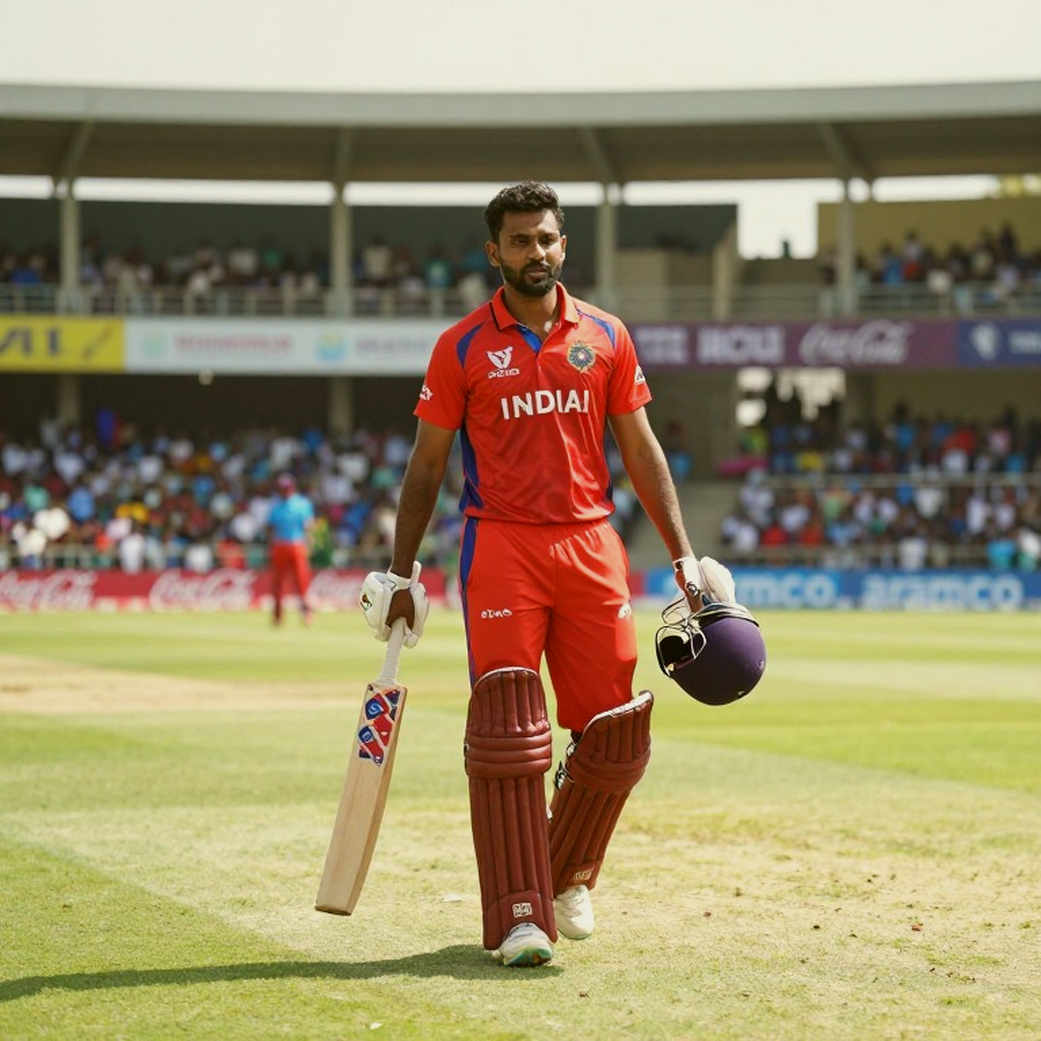
And the T20 number is the most misleading of all. Thirty-two of thirty-eight against nineteen of thirty-four — offered in support of an ODI argument, when a T20 all-rounder carries four overs and an ODI all-rounder ten. Workload, spell length, recovery time: all different. A man who succeeds in four overs is not the same man in ten.
The third thing the report treats as background is actually the main variable: age 32 and the recent cluster of injuries. The question is not 'can he be fit for the World Cup'; it is whether he can survive a seven-week tournament. A bilateral series and a World Cup do not carry the same load. Not one ODI since March 2026 also means a return would require a graduated bowling load — no fast-medium all-rounder goes from zero to a ten-over quota without carrying re-injury risk.
What stings most in this whole debate is that three ICC titles have been made into proof of Pandya's indispensability. The same XI was winning when Pandya was out of the bowling attack. The marginal contribution of one all-rounder to three separate tournament wins cannot be measured from the data available. What can be measured is this: India's success has come not from Pandya's presence but from the depth in which the next man is also international class. Declaring that depth dependent on one name insults the depth itself.
So what is the answer? Perhaps that India do not need Pandya's successor but a new answer to Pandya's question. In South Africa a fourth and fifth seam option will be necessary, and if that option cannot come from the No. 7 batsman, then letting it come from No. 8 is the sensible thing. Batting depth will drop, yes. But walking out with an incomplete ten-over quota is the bigger risk, because in a World Cup those overs will have to be bowled by somebody — the only question is whose hand the ball is in and what the captain's face looks like.
One picture stays with me. A ground on an A tour, the first spell of the morning, a twenty-year-old finishing his fifth over, walking to the boundary and asking the umpire for the ball — for the tenth. By then the selector's phone has not rung. A newsletter is just a stadium folded small enough to carry home, and today the loudest sound in that stadium is a question whose answer is not in a list but in an over. Will India spend the next twelve months looking for a player, or find the courage to accept that the player will now be born not in one slot but in three different places?